Category: Blog

Your blog category

  • The Colours of Our Loktantra

    How colour became a language of identity, mobilisation and memory in Indian democracy


    Written by Kritik Jain
    Published on 4 March 2026


    Ever been to a political rally in India? The first thing you notice is often not the leader or the issue being discussed, but the colours. Waves of saffron, green, blue and red move across open grounds. Party scarves are tightly worn by attendees. Flags flutter from motorcycles and cars. Entire neighbourhood walls are repainted in party colours, signalling allegiance to one group over another.

    Democracy in India is not only heard in slogans and debates; it is also seen in shades that transform public spaces into a canvas of political expression. Colours in our democracy have become a language that translates ideology into something immediately recognisable.
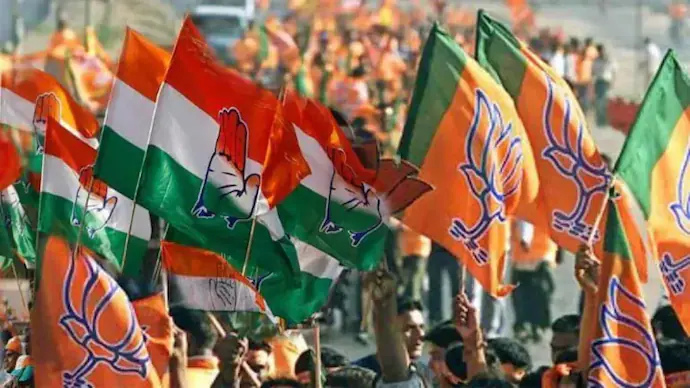
    Image source: India Today https://www.indiatoday.in/india/story/66-income-of-7-political-parties-came-from-unknown-sources-electoral-bonds-report-2345615-2023-03-12

    The importance of colour in Indian politics has historical roots. In the decades after independence, literacy levels varied widely across the country. Visual symbols therefore became essential tools of political communication. Over time, colours evolved from simple party identifiers into markers of collective identity. They simplified messaging and helped parties build emotional recognition among supporters. Today, party flags, posters, scarves, and even social media display pictures on platforms such as Instagram and X bind individuals into visible political communities.

    Let us look at how different colours have come to represent various political traditions.

    Saffron is perhaps the most visually dominant political shade in contemporary India. Historically associated with sacrifice and spirituality, it carries deep civilisational symbolism. In modern times, it is predominantly used by organisations linked to cultural nationalism and conservatism by parties such as the Bharatiya Janata Party. The colour’s resonance lies in its emotional charge, invoking heritage and collective pride.

    Red has long signified labour movements and socialist politics. It is closely associated with parties like the Communist Party of India (Marxist) and trade unions across industrial regions. In states like Kerala and West Bengal, red flags defined the political landscape for decades and still does. Workers’ unions continue to march under red banners during protests demanding wage rights, reform and equity.

    Green occupies a distinct space in India’s political landscape symbolising agrarian identity, regional aspirations and minority representation including muslims. Regional parties such as the All India Majlis-e-Ittehadul Muslimeen and farmers’ representative organisations such as Bharatiya Kisan Union dominate green in their flags and campaign material. Farmer mobilisations using this colour evokes fertility and rootedness in the soil, a powerful theme in a country where agriculture sustains more than a billion.

    Blue represents one of the most significant social transformations in Indian politics. Deeply connected with Dalit and Ambedkarite movements. The Bahujan Samaj Party and Aazad Samaj Party (Kanshi Ram) have institutionalised blue as a symbol of social justice and constitutional rights. It is a declaration of dignity and political awakening among historically marginalised communities.

    White carries powerful associations. It evokes peace, simplicity and ethical politics, often linked symbolically to Mahatma Gandhi and the khadi movement. White kurtas and caps often called a Gandhi cap signal public service and neutrality, even worn by leaders across party lines.

    Above all party colours stands the Indian tricolour, our Tiranga. The national flag integrates saffron for courage and sacrifice, white for truth and peace, and green for faith and fertility, with the navy blue Ashoka Chakra representing law and dharma. Unlike partisan flags, the tricolour represents the constitutional foundation of the Republic, transcending electoral competition. It reminds citizens that democracy operates within a shared framework of rights, duties and the rule of law.

    During elections, the colours move from symbolism to strategy. What once represented history and ideology becomes a practical tool of visibility, helping parties mark presence and energise supporters in the most immediate and visual way.

    Yet the power of colour also carries risks. When political shades extend into social boundaries, they can intensify polarisation. Public debate may shift from policy differences to identity-based confrontation. Colour, once a tool of participation, risks becoming a marker of division. In such moments, democracy narrows. Instead of celebrating plural participation, colours may begin to signal suspicion or hostility.

    Upholding constitutional values above party colours therefore requires conscious effort from both institutions and citizens. Political leaders must reaffirm that loyalty to the Constitution supersedes loyalty to any flag. Educational institutions can strengthen constitutional literacy so that young voters understand the principles underlying democratic competition. Media platforms can prioritise policy discourse rather than amplifying colour-coded divisions. Civil society initiatives can create shared spaces such as cultural festivals, public dialogues and community programmes, where citizens interact beyond partisan lines. 

    Above all, voters can ensure that political differences remain respectful and rooted in democratic values. The Constitution provides the grammar of democracy and colours are only its vocabulary.

    India’s democracy is vibrant because it is plural. Its streets blaze with saffron processions, red marches, green farmer rallies, blue assertion gatherings and white-clad leaders invoking peace. Each colour represents history and ideology. Yet when the dust of elections settles, all these shades coexist under one tricolour.

    India’s democracy thrives not because one colour dominates, but because many colours compete and coexist within a constitutional framework that belongs equally to all. In the end, beyond every banner and scarf, India remains diverse in its expression, yet united in its principles.

    भारत एक रंग नहीं, अनेक रंगों का समागम है।” (India is not one colour, but a confluence of many.)


    References:

    Political party colours in India – Scribd

    https://thediplomat.com/2018/09/paint-it-saffron-the-colors-of-indian-political-parties
  • The Search for a Public Toilet

    The Quiet Governance of Mobility, Dignity and Time

    Written by Kritik Jain
    Published on 7 February 2026


    Every evening, the park near my house fills up with children playing, elderly couples walking slowly, women sitting for a few minutes of air. The public toilet stands right there in the park, freshly painted and clearly marked yet it remains locked. No one protests, they simply go back home not because the park is closed but because bodies have limits. Those living farther find a makeshift solution, a wall everyone pretends not to notice.

    Public toilets are often seen as hygiene issues, rarely as enablers of mobility. Yet they shape far more than comfort, defining how freely people can move, work, learn and participate in public life. They are not just facilities but essential infrastructure for social inclusion, health and dignity.

    Poorly maintained toilets risk urinary and gastrointestinal infections, while avoiding them causes chronic discomfort. Open urination spreads disease, breeds mosquitoes and creates odours and discomfort that heighten stress and erode public safety and dignity.

    There is also a mental health impact that is rarely discussed. The constant calculation of Where is the nearest toilet? Will it be usable? Is it safe? creating anxiety that accumulates quietly. For many, the problem goes deeper. Poor privacy, open urinals and people waiting outside can make public toilets psychologically inaccessible, even when they exist. For people who are toilet-dependent due to medical conditions, such environments intensify feelings of shame and loss of control.

    This anxiety quietly reshapes behaviour. People plan their outings around known toilets, use facilities before leaving home or avoid public spaces altogether. When the need arises outside, many are forced to rely on cafés or hotels, often spending money just to access dignity. Searching for a usable toilet silently reduces productive hours, creating time poverty. Over time, public space becomes something to manage rather than enjoy.

    For women, the issue is inseparable from dignity and safety. Poor lighting, broken locks, exposed layouts and unclean facilities limit how long they can remain outside, reinforcing early returns that appear voluntary but are structurally imposed. Many restrict water intake before stepping out, anticipating inadequate facilities ahead. When forced into open spaces, the risk of harassment and assault compounds both physical vulnerability and mental stress.

    For students, poor sanitation also makes the school day stressful, reducing focus and learning outcomes. Inadequate facilities push girls to miss school, especially during menstruation, increasing dropout rates. 

    Dirty or locked public toilets leave a lasting impression on visitors. Tourists, especially foreign, may avoid areas or carry home negative perceptions of the city, affecting its image and hospitality reputation.

    For workers in informal sectors such as street vendors, delivery personnel, every day is punctuated by the anxiety of “where to go” directly affecting earnings. Access to private toilets becomes an invisible privilege, while public sanitation gaps disproportionately burdens those with the least choice. 

    In essence, the ability to relieve oneself safely and privately becomes a silent barrier to equality, participation and mobility. 

    It’s worth noting, the government has appropriate policies in place. Starting with India’s flagship programme on sanitation, Swachh Bharat Mission (SBM) under MoHUA and MoJS. SBM provided access to toilets for 100 million rural households, benefiting 500 million residents. SBM-Urban, nearly 6 million toilets have been constructed in urban areas. With this India achieved the status of Open Defecation Free (ODF) in 2019 itself followed by ODF+.

    Another key component, Swachh Survekshan, India’s annual cleanliness survey ranking cities on parameters like citizen feedback, toilet availability and maintenance among others.

    World Toilet Day, observed on 19 November, reinforces India’s alignment with Sustainable Development Goal 6 – clean water and sanitation by 2030. Initiatives such as “Aspirational Toilets” aim to provide modern and tech-enabled toilets for better accessibility at tourist destinations, high-footfall areas and religious sites. Campaigns like “Toilet Paas Hai” andMain Saaf Hi Achha Hoon” promote responsible use. Several states have also introduced women-centric facilities such as “Pink Toilets.”

    Urban Local Bodies are responsible for ensuring that these facilities function.

    Yet lived experience tells a different story. 

    The first gap is between existence and usability. Many public toilets stay locked for long hours, becoming mere showpieces. A locked toilet is a visible breach of trust. Others are so poorly maintained with stench, broken doors and no water that people avoid them.

    The second gap is accountability. Paid access raises expectations, but responsibilities are unclear, monitoring weak and focus often on attendance, not outcomes. Design flaws like lack of ramps, narrow doors, missing grab bars make “disabled-friendly” toilets unusable and women and the elderly are left overlooked.

    Penalising open urination without ensuring a functional alternative nearby risks criminalising necessity rather than improving public health showcasing weak implementation. The focus is often on the number of toilets built rather than usability. 

    Public behaviour also plays a role. Even where toilets exist, careless usage, vandalism, water wastage and disregard for cleanliness degrade shared facilities. Over time, this erodes respect for public infrastructure. 

    Governments can build world-class amenities but without basic civic responsibility, such projects deteriorate rapidly. Authorities can enforce rules and deploy staff but they can’t instill conscience. Many choose the convenience of open urination over walking a few extra metres despite knowing the health, hygiene and dignity costs. 

    So what can be done?

    Institutions can begin by designating a dedicated “Sanitation Cell” within municipalities, responsible for planning, location, design, maintenance and signage of public toilets. Every facility should clearly display the name and contact details of the responsible agency or contractor with strict penalties for non-compliance or closure during operational hours. Smart sensors can flag water shortages, blocked drains, severe odour levels and contactless flush.

    Digital toilet-locator maps should show nearby facilities, operating hours, payment status and accessibility features. Basic hygiene kits at public toilets containing seat covers, toilet paper, sanitiser, disinfectant and disposal bags can significantly improve user experience.

    Citizens also have responsibilities. Open urination should not be normalised where functional toilets exist. Convenience cannot override collective dignity. Markets, RWAs, transport unions and vendors’ associations can act as local oversight bodies, discouraging misuse, reporting failures and escalating maintenance issues through formal channels. Engaging children early through initiatives like Swachh Aadatein helps build lasting sanitation habits. Institutional action sustained by public cooperation is what keeps systems functional.

    We rarely think about toilets when they work. That is exactly the point. Good governance is invisible until its absence begins to shape how people move, plan and live. Access to a toilet is not a convenience, it is a basic right to dignity.

    Lastly, “शौचालय सुविधा नहीं, सम्मान है।” (“A toilet is not a facility, it is dignity.”).


    References

    Data, Swachh Bharat Mission: https://www.pib.gov.in/Pressreleaseshare.aspx?PRID=1811973&reg=3&lang=2 https://www.pib.gov.in/PressReleasePage.aspx?PRID=2052319&reg=3&lang=2 

    World Toilet Day 2025; Aspirational Toilets: https://www.pib.gov.in/PressReleasePage.aspx?PRID=2191751&reg=3&lang=2

    Pink Toilet initiative: https://timesofindia.indiatimes.com/city/delhi/mcd-identifies-14-locations-for-installing-pink-toilets-in-refurbished-abandoned-buses/articleshow/126532386.cms  https://www.pib.gov.in/PressReleaseIframePage.aspx?PRID=1817735&reg=3&lang=2 

  • Footpaths That End Too Soon

    What walking in our cities reveals about everyday priorities.

    Written by Kritik Jain
    Published on 1 February 2026


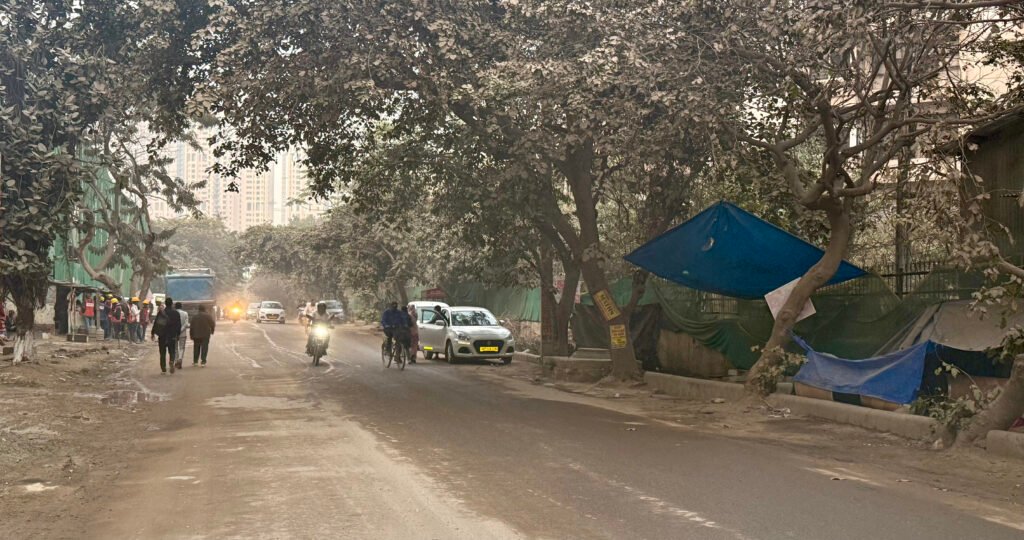
    It was an ordinary evening walk to the local market in Gurugram. I stepped onto the service lane when a speeding car brushed past me, close enough to leave me stunned. Searching for a safer place to walk I noticed the footpath beside the road: broken, fragmented with an open drain and just ended. Not diverted. Just… stopped. In places where the footpath did exist, it was partially taken over by parked vehicles and small encroachments, leaving little space for anyone to walk. I looked around and realised that everyone else was walking on the road, inches away from moving vehicles. What unsettled me most was not the danger itself, but how unbothered people seemed by it and how worrying that kind of normalisation truly is.

    A footpath that ends abruptly is not merely a design oversight but a reflection of a deeper gap in how urban governance translates intent into on-ground experience. It has a huge impact on walkability, accessibility and equality. It shows how public infrastructure is planned in pieces, executed without continuity and delivered without accountability for how people actually use the city.

    Walking is the foundation of all urban mobility. Almost 50% of public commute is done by walking. When that is treated as an afterthought, it tells us something important about priorities. 

    A broken or encroached footpath shapes our daily lives quietly. It costs us time with detours, slow walks. It costs us money by using auto rickshaws, cabs for walkable distances. Most important of all, it costs us our safety with children stepping onto the busy roads, elderly feeling helpless and confused, women constantly adjusting routes and the physically disabled becoming invisible due to less attention given to public Right of Way (ROW).

    What does the system say? 

    In Gurugram, multiple agencies: Gurugram Metropolitan Development Authority (GMDA), Municipal Corporation of Gurugram (MCG) and others handle overlapping responsibilities for pedestrian infrastructure.

    At the national level, schemes like AMRUT speak of urban transformation which includes footpaths/walkways, sidewalks, foot over-bridges and facilities for non-motorised transport such as bicycles.

    The Hon’ble Supreme Court has also held that safe, accessible, disabled-friendly and encroachment-free footpaths are protected under Article 21 of the Indian Constitution as part of the Right to Life.

    On paper, walking is not ignored. It appears in guidelines, policies, master plans and tender documents. Much seems to be happening officially. So where do the gaps remain?

    According to a report, a footpath is not decorative, it is a primary mobility component of the public ROW, equal in legitimacy to carriageways and utilities. Yet pedestrians still account for nearly 20% of road deaths in India. When pedestrian accidents are viewed as isolated incidents rather than systemic risks, the opportunity is missed to prevent them through better planning and enforcement. 

    Responsibility is often fragmented. One agency builds the road, another the footpath, a third digs it up. A designated single point of responsibility is missing. A footpath that vanishes halfway still qualifies as “infrastructure” because paperwork reaches its destination even when people cannot. 

    Decisions are also made in isolation. Roads are widened without extending footpaths, utility works proceed without restoring walking levels and temporary diversions remain long after projects end. Urban systems often lean on temporary fixes to manage immediate needs while permanent solutions require sustained coordination and institutional alignment.

    According to GMDA’s Right of Way Management Report 2024, Less than 50% of roads in Gurugram have standard footpaths and only around 2% of roads have dedicated cycle tracks. The on-ground outcomes show that coordination and accountability still needs to be strengthened. But institutions are only one part of the picture. Well, there’s one more layer to it and that is we the people.

    Citizens, including many of us reading this, have adapted. We walk around potholes, accept encroachments and park our vehicles on footpaths “just for a minute.” We complain but we also comply. We, understandably adapting to the situation, often find temporary workarounds that inadvertently reduce walking space. 

    Even where footpaths exist, their purpose is frequently compromised. Walking space is occupied by parked vehicles, informal vending, extended private ramps and in some cases, two-wheelers using the pavement to bypass traffic. Vehicles halt on zebra crossings intended for pedestrians. Each such encroachment narrows the space meant for walking and gradually pushes pedestrians onto the carriageway, converting a routine commute into a safety risk.

    In several neighbourhoods, residents refer to what they describe as a “parking mafia”, informal attendants who convert public walking space into paid parking. Land intended for collective use is treated as private control, reflecting weak enforcement and blurred accountability over the right of way.

    The physical condition of footpaths further compounds the problem. Broken slabs, uneven surfaces, open drains and incomplete utility restoration turn pedestrian corridors into obstacle courses. A single misstep can result in serious injury, particularly for children, elderly citizens and persons with disabilities. Infrastructure meant to provide safety instead introduces risk.

    The consequences extend beyond mobility. Walking is the most accessible and inclusive form of physical activity. When streets feel unsafe or obstructed, people reduce walking, indirectly contributing to sedentary lifestyles, higher pollution exposure from vehicular dependence and increased stress levels.

    Cities frequently articulate commitments to sustainability and emission reduction. Yet the most sustainable mode of transport i.e. walking, remains undervalued in practice. Climate goals and environmental commitments cannot be meaningfully pursued if urban design makes walking unsafe, inconvenient or secondary.

    So what can be done about this?

    Institutions can begin by assigning single-point responsibility for pedestrian networks, not scattered ownership like ROW Management Cell (RMC) which includes mobility planners, infrastructure engineers, urban environment officials, traffic police, RWAs assisting local agencies in planning their projects. 

    Any agency that digs or repairs utilities must be required to restore footpaths to their original condition, with penalties for delays or incomplete work. Footpaths must be treated as continuous infrastructure and not “wherever space permits”. Digital grievance and monitoring which has a GIS-based ROW portal with transparent complaint tracking for citizens and time-bound resolution. Strengthen the implementation of GMDA’s Comprehensive Mobility Management Plan (CMMP), 2020 to reinforce its “people-first” priority. Success should be measured not by kilometres built but by continuity and usability.

    Community engagement is the key to civic awareness. Citizens should stop normalising encroachment by shops, vehicles or ourselves. Report broken links consistently, not just on social media but through proper formal channels. Issues should be raised in ward meetings, RWAs and local forums. Support local initiatives that prioritise walking in RWAs, school zones, senior-friendly streets. 

    Finally, back the institutions when they do their part by recognizing effort, supporting implementation and encouraging accountability. Lasting change requires both enforcement and public support. The city works best when citizens, RWAs and institutions act in concert. A clear example of this approach can be seen on Sanath Road in Gurugram’s Udyog Vihar, developed as a “people-first street” with support from the Raahgiri Foundation, the project demonstrates how coordinated action and collaborative governance between state agencies and citizen institutions can translate intent into safe, usable public space.

    Walking is an essential infrastructure, not a decorative add-on. Every footstep tells a story about our city. If we choose to notice and act, we can shape cities that move with us, not against us. When we start walking differently, our city will follow.


    References

    Hon’ble Supreme Court ruling: https://www.scobserver.in/journal/sc-directs-union-to-frame-pan-india-guidelines-for-pedestrian-safety/

    Data, road deaths: https://www.hindustantimes.com/india-news/pedestrians-accounted-for-12-5-of-total-deaths-in-2023-govt-data-101756439739192.html

    Data, Footpaths in Gurugram:  https://www.gmda.gov.in/static/docs/ROW_Management_27.03.2024.pdf

    Raahgiri Foundation: https://raahgirifoundation.org/street-redesign-redevelopment/

error: Content is protected !!